
Choosing the right commercial ice maker is not just about buying the machine with the highest daily ice output. The best choice depends on how much ice you actually use, where the machine will be installed, how often you host guests, and whether you need ice for home use, office use, or light commercial service.
For many buyers, the decision comes down to two popular sizes: a 100 lb/day ice maker and a 150 lb/day ice maker.
Both can be useful for home bars, cafés, offices, restaurants, and party spaces. But they are not designed for exactly the same type of user. A 100 lb/day ice maker is often the better fit for home bars and everyday entertaining, while a 150 lb/day model is better for users who need more ice throughout the day or during busy service hours.
In this guide, we’ll compare 100 lb and 150 lb commercial ice makers by ice output, storage, space needs, installation requirements, use cases, and overall value, so you can choose the right model for your space.
Quick Answer: 100 lb or 150 lb Ice Maker?
Choose a 100 lb/day ice maker if you want reliable clear ice for a home bar, kitchen drink station, office break room, small café, garage bar, or weekend entertaining. It offers a strong balance of capacity, size, and value for daily use.
Choose a 150 lb/day ice maker if you serve more drinks throughout the day, run a café or small restaurant, host larger gatherings often, or want extra ice capacity for peak hours.
In simple terms:
100 lb/day is usually the better choice for home bars and light commercial use.
150 lb/day is better for higher-demand spaces and more frequent ice use.
Why Ice Maker Size Matters
It is easy to underestimate how much ice you need. A few drinks per day may not require much ice, but home bars, cafés, offices, and parties can use ice much faster than expected.
Ice is used for more than just filling glasses. It may also be used for cocktail shakers, pitchers, coolers, iced coffee, iced tea, lemonade, soda, mocktails, and party drink stations. If you regularly serve multiple people, a small countertop machine may not keep up.
That is why many buyers start looking at undercounter commercial ice makers. They provide more consistent output, larger storage, and a more permanent setup than compact portable ice makers.
The key is choosing the right size. Too small, and you may still run out of ice. Too large, and you may pay for more capacity and space than you really need.
If you are still estimating your daily ice needs, our home bar ice maker size guide can help you compare different use cases before choosing between a 100 lb and 150 lb model.
When a 100 lb Ice Maker Makes the Most Sense
A 100 lb/day commercial ice maker is a practical choice for people who need more ice than a countertop unit can provide, but do not need the size or capacity of a larger commercial machine.
This size is especially useful for:
- Home bars
- Kitchen islands
- Office break rooms
- Garage bars
- Game rooms
- Small cafés
- Light drink stations
- Weekend parties
- Family gatherings
- Everyday iced drinks
For many homeowners, 100 lb/day is more than enough for regular use. It gives you the flexibility to prepare cocktails, iced coffee, soda, tea, sparkling water, and party drinks without constantly buying bags of ice.
The Mojgar 100 lb/day Undercounter Commercial Ice Maker is designed for this kind of use. It produces clear cube ice, stores ice in an insulated bin, offers adjustable ice thickness, and can be used as a built-in or freestanding machine.
It is a good fit for people who want a more serious ice solution without moving into a large high-output commercial setup.
When a 150 lb Ice Maker Is the Better Choice
A 150 lb/day commercial ice maker is better for users who need more ice more often.
This model makes more sense if you have:
- A busier café
- A small restaurant or bar
- A large office break room
- Frequent party hosting
- A larger home bar
- High daily drink service
- Peak-hour beverage demand
- Multiple people using ice throughout the day
The biggest advantage of a 150 lb/day model is extra capacity. If ice demand spikes often, the additional output gives you more flexibility. This can be helpful during lunch rushes, dinner service, office events, parties, or busy café hours.
For home users, 150 lb/day may be more than necessary unless you entertain often or have a larger drink station. For business users, the extra output may be worth it because running out of ice can slow down service.
If your space regularly serves drinks throughout the day, the 150 lb model may be the safer choice.
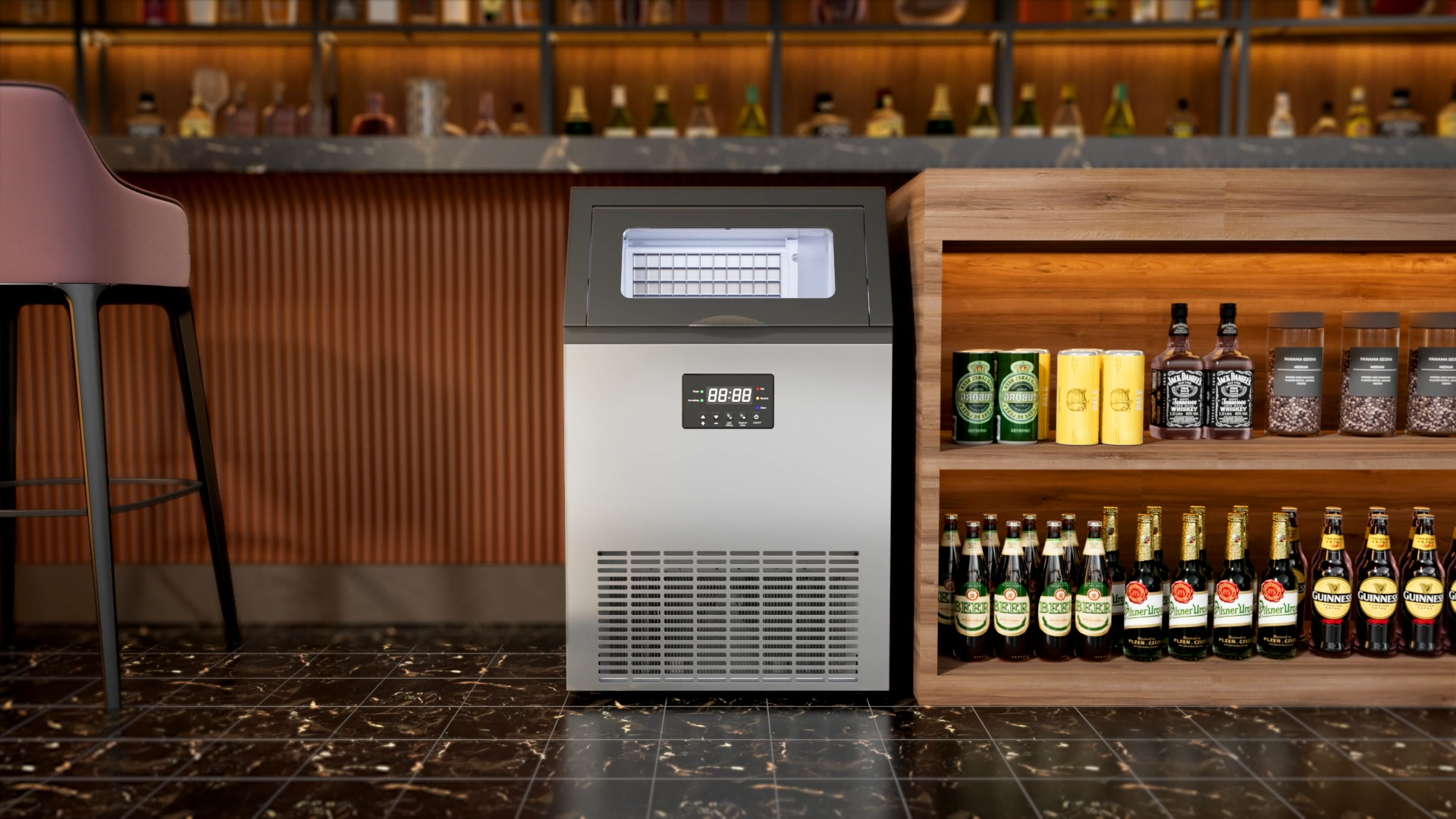
Home Bar Use: Which One Is Better?
For most home bars, the 100 lb/day model is usually the better fit.
A home bar needs enough ice for cocktails, whiskey, iced coffee, soda, tea, and entertaining. But most home bars do not need restaurant-level production every day.
The 100 lb model gives you strong daily capacity while staying more compact and easier to fit into residential spaces. It works well for kitchen islands, built-in bar cabinets, garage bars, and entertainment rooms.
Choose the 100 lb model if your main use is:
- Weekend hosting
- Family gatherings
- Cocktails and whiskey
- Daily iced coffee or soda
- Game nights
- Home bar entertaining
Choose the 150 lb model only if your home bar is used very frequently, you often host large groups, or you want extra ice capacity for long events.
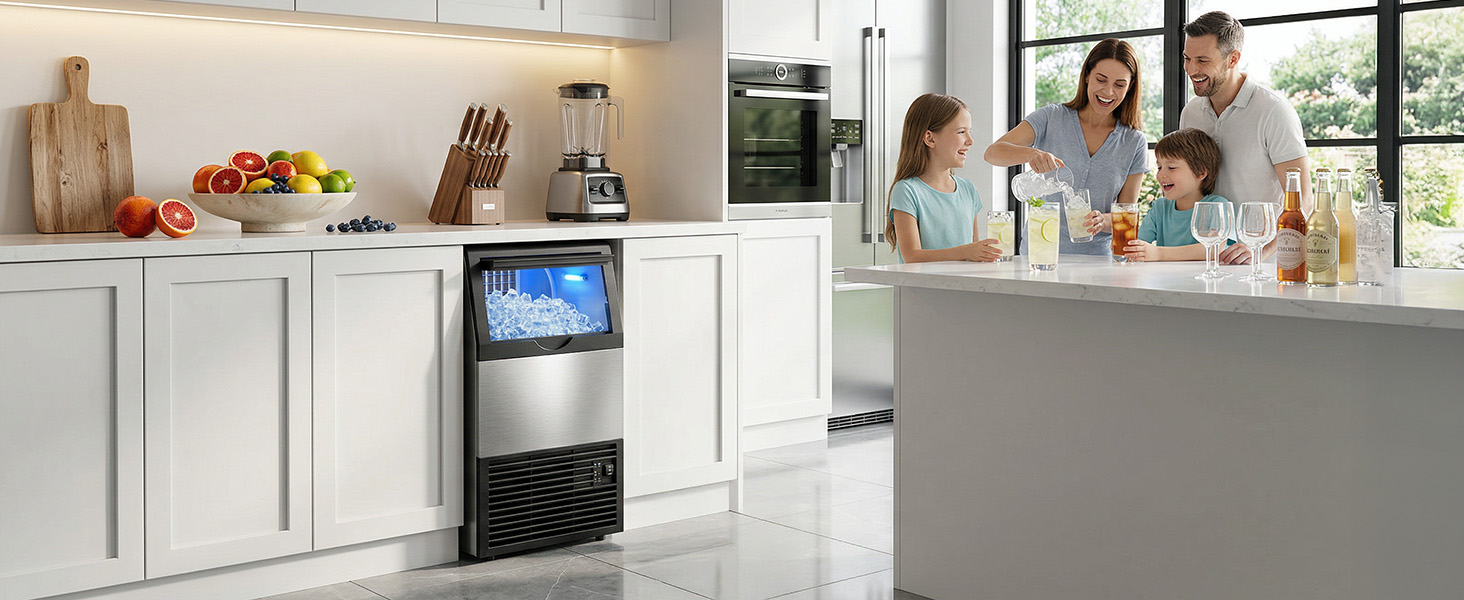
Café, Office, and Small Business Use
For cafés, offices, and small businesses, the right choice depends on daily beverage demand.
A small café that serves iced coffee, tea, lemonade, and soda may find the 100 lb model suitable if drink volume is moderate. It can support daily drink prep without taking up as much space as a larger machine.
However, if your café has busy peak hours or makes iced drinks throughout the day, the 150 lb model may be a better investment. The extra production can help reduce the risk of running short during busy service.
For offices, the decision depends on the number of employees and how often the break room is used. A smaller office may do well with the 100 lb model, while a larger office with frequent meetings, daily iced drinks, or shared beverage stations may benefit from 150 lb capacity.
Installation and Space Considerations
Before choosing either model, make sure your space is ready for an undercounter ice maker.
Unlike a small countertop ice maker, an undercounter commercial ice maker usually requires a more permanent setup. Before ordering, check the following:
- Cold water supply line
- Proper drain connection
- Grounded power outlet
- Ventilation clearance
- Stable and level surface
- Enough space for installation and access
- Product dimensions
- Cabinet opening, if installing built-in
Both 100 lb and 150 lb models are designed for users who want more serious ice production, so installation planning is important.
The 100 lb model is generally easier to fit into compact home bar or kitchen spaces. The 150 lb model offers more output, but it may require more room depending on the exact product dimensions.
If your installation space is limited, measure carefully before choosing the larger model.
Built-In or Freestanding: Why It Matters
One advantage of undercounter ice makers is flexibility. Many models can be installed under a counter or used as freestanding machines, depending on the setup.
For a home bar, built-in installation creates a cleaner, more finished look. It keeps the machine integrated with your cabinetry and frees up counter space.
For cafés, offices, or utility spaces, freestanding placement may be easier if you have a suitable water line, drain, outlet, and ventilation.
Before deciding, think about how permanent you want the setup to be. If you are building a dedicated home bar, built-in installation may be worth planning for. If you need more flexibility, freestanding use may be more practical.
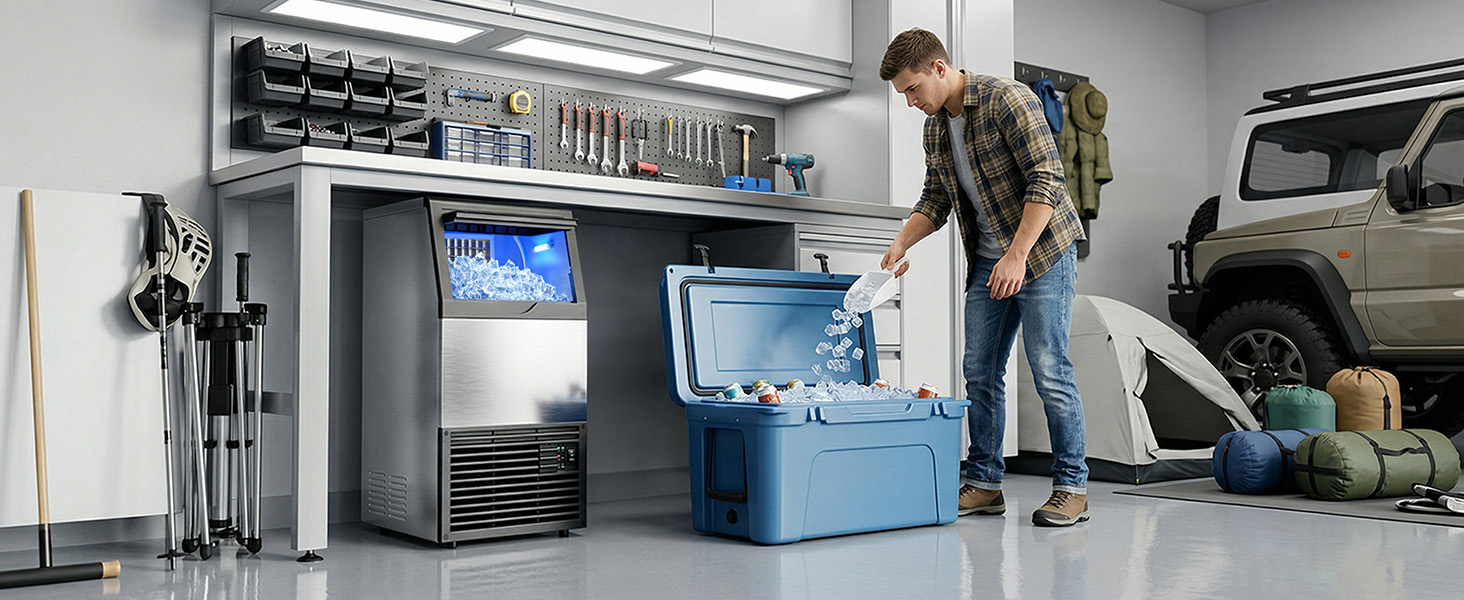
Ice Storage: Daily Output Is Not the Only Number That Matters
Many buyers focus only on daily ice production, but ice storage is also important.
Daily production tells you how much ice the machine can make over time. Storage capacity tells you how much ice can be held and ready to use at once.
For example, if you are hosting a party, you may not want to wait for ice to be made during the event. You want a bin with enough ice ready when guests arrive.
A 100 lb model with an insulated bin is usually enough for home bars, small gatherings, and regular daily use. A 150 lb model with larger storage is better for heavier demand or longer service periods.
One important point: most commercial ice maker bins are insulated, not refrigerated like a freezer. Some melting is normal over time, and melted water should drain properly through the drain connection.
This is normal for this type of machine and should be explained clearly to customers before purchase.
Ice Type and Drink Quality
Both 100 lb and 150 lb commercial ice makers are usually chosen by people who want clear cube ice for drinks.
Clear cube ice works well for:
- Cocktails
- Whiskey
- Iced coffee
- Soda
- Iced tea
- Lemonade
- Sparkling water
- Coolers
- Daily drink service
It is more versatile than specialty ice types because it can be used across many drinks and serving situations.
If your goal is a dedicated home bar or drink station, clear cube ice is one of the most practical choices.
Adjustable ice thickness is also useful. Thicker cubes can work well for cocktails and slower sipping drinks, while thinner cubes can chill drinks faster.
Maintenance and Cleaning
Both 100 lb and 150 lb ice makers need regular cleaning. Any machine that handles water and ice should be maintained properly to keep ice fresh and performance stable.
A one-touch self-cleaning function can help simplify routine maintenance, but it does not mean the machine never needs care.
For best results:
- Clean the machine regularly
- Use filtered water if your area has hard water
- Keep the ice bin clean
- Check the drain connection
- Make sure ventilation areas are not blocked
- Follow the product manual for maintenance
If the machine is used in a café, office, or restaurant, cleaning may need to be more frequent than in a home bar.
Price and Value
The 100 lb model is often the better value for users who want strong ice output without going larger than necessary. It is usually the best balance for home bars, offices, small cafés, and everyday entertaining.
The 150 lb model costs more, but the added output may be worth it if your space has higher daily demand. For businesses or frequent hosts, the extra capacity can be more practical in the long run.
Instead of choosing based only on price, think about your real ice usage.
If you only need ice for daily drinks and weekend hosting, 100 lb may be enough. If you regularly serve many drinks throughout the day, 150 lb may save time and reduce the chance of running out.
Choose the 100 lb Ice Maker If You...
The 100 lb model is likely the right choice if you:
- Want an ice maker for a home bar
- Host weekend parties or family gatherings
- Need steady ice for daily drinks
- Have a small café or office break room
- Want a more compact undercounter ice maker
- Prefer strong value for everyday use
- Need more capacity than a countertop ice maker
- Do not want a larger commercial machine
For most home bar users, this is the most practical choice.
Choose the 150 lb Ice Maker If You...
The 150 lb model is likely the better choice if you:
- Run a café, restaurant, or bar
- Serve drinks throughout the day
- Have a larger office break room
- Host large events often
- Need extra ice during peak hours
- Want more storage and output
- Prefer to have more capacity than you currently need
- Use ice for more than just occasional drinks
If your demand is frequent, heavy, or business-related, the 150 lb model may be worth the upgrade.
Final Recommendation
Both 100 lb and 150 lb commercial ice makers can be excellent choices, but they serve different needs.
Choose the 100 lb ice maker if you want a compact, high-value solution for a home bar, office, small café, kitchen drink station, or weekend entertaining.
Choose the 150 lb ice maker if you need more output for a busier café, restaurant, larger office, event space, or frequent high-volume use.
For most home bars and light commercial spaces, the 100 lb model offers the better balance of size, capacity, and value. For higher-demand environments, the 150 lb model gives you the extra production needed to stay ready during busy hours.
Ready to compare both models?
Shop the Mojgar 100 lb Ice Maker
Shop the Mojgar 150 lb Ice Maker
FAQ
Is a 100 lb ice maker enough for a home bar?
Yes. For most home bars, a 100 lb/day ice maker provides enough ice for cocktails, iced coffee, soda, tea, weekend gatherings, and daily use. It is also more compact than larger commercial models, making it easier to fit into many residential spaces.
Who should choose a 150 lb ice maker?
A 150 lb/day ice maker is better for cafés, restaurants, bars, larger offices, event spaces, and users who need more ice throughout the day. It is also a good choice if you often host large gatherings or need extra capacity during peak hours.
Do both models need a water line?
Yes. Undercounter commercial ice makers are typically designed to connect to a cold water supply line. Always check the product manual and installation requirements before purchase.
Do both models need a drain?
Yes. A proper drain connection is required. The ice bin is insulated, not a freezer, so some melting is normal over time and melted water should drain properly.
Can these ice makers be used at home?
Yes. Both 100 lb and 150 lb ice makers can be used in residential spaces as long as the installation requirements are met. For most homes, the 100 lb model is usually easier to fit and more practical for everyday use.
Which model is better for parties?
For regular weekend parties and home entertaining, the 100 lb model is usually enough. For larger events or frequent high-volume use, the 150 lb model may be a better fit.
Which model is better for a café?
A small café with moderate drink volume may do well with the 100 lb model. A busier café that serves iced drinks throughout the day may benefit from the 150 lb model.
Are insulated ice bins the same as freezers?
No. An insulated ice bin helps slow melting, but it is not a freezer. Some melting is normal, and melted water should drain through the drain connection.